
You can begin making thoughtful food photographs with a window, a dish, and a little room to move. Before adding props or changing camera settings, look at where the light comes from, how it falls across the food, and what happens when you move the plate.
That simple act of noticing is a useful starting point whether you photograph recipes for yourself or create content for restaurant clients.
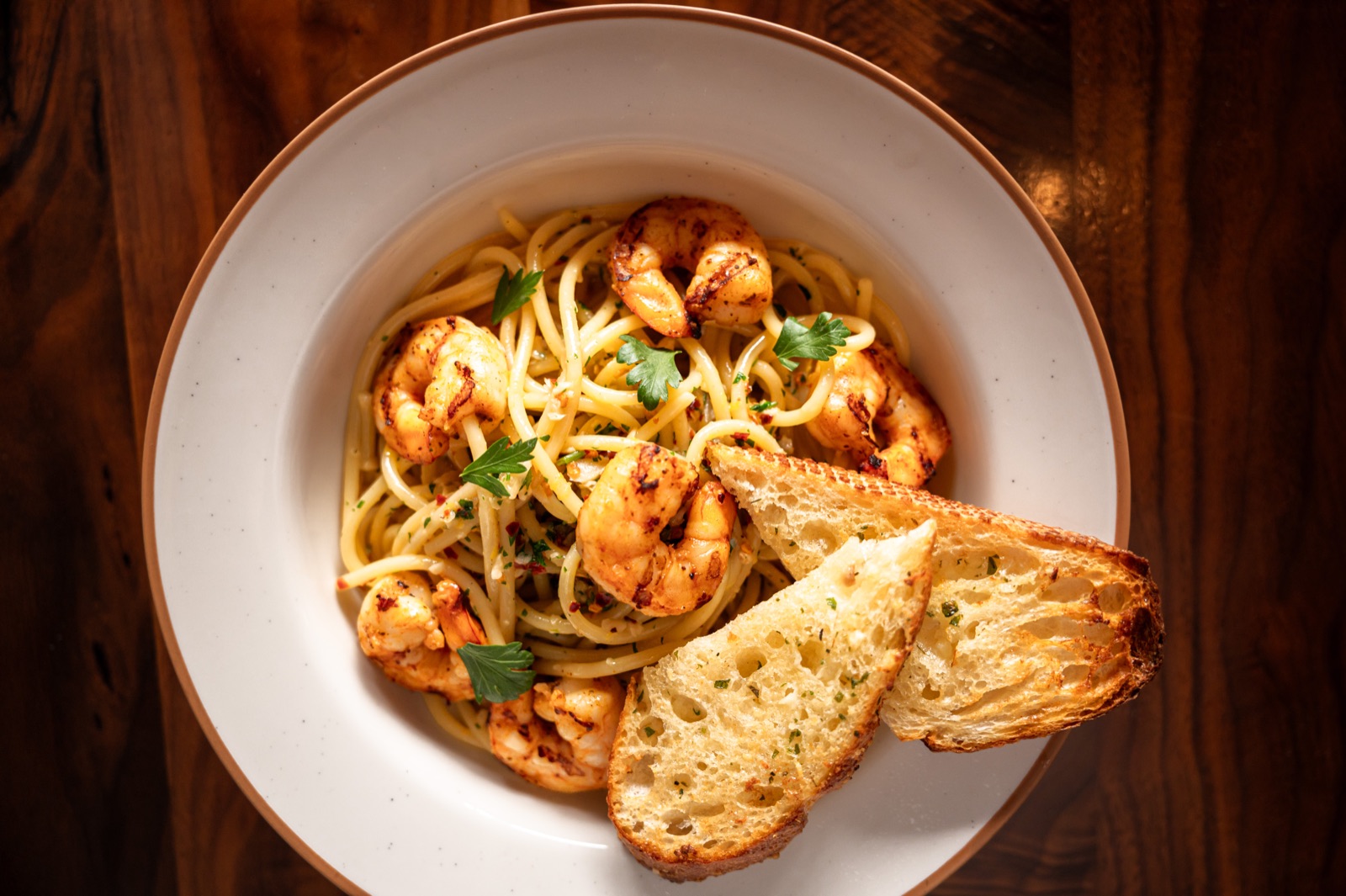
Start with the window, then choose the table
A beautiful table is not always the best place to photograph a dish. Look for a window and watch the shadows near it. Are their edges soft and gradual, or sharp and defined?
For your first experiment, choose indirect window light: a place where daylight reaches the dish without a beam of direct sun falling across it. This gives you a manageable starting point for studying texture and shape. Direct sunlight can be beautiful too, but it creates a different mood and stronger contrasts.
If overhead lights are adding an unwanted color to the food, turn them off when you have permission. Working with one main light source makes it easier to understand what is happening.

Move the plate before changing everything else
Place your dish with the window to one side. Notice which details catch the light and where the shadows fall. Then rotate the plate or move around the table.
A small change can reveal the folds of pasta, the crumb of bread, or the sheen on a sauce. Try light coming slightly from behind the dish as well, especially when photographing translucent drinks or delicate leaves. Watch the brightest areas so they retain the detail you want.
There is no single position that works for every dish. The goal is to make a deliberate choice.

Let the shadows contribute
Shadows give food dimension. Before trying to remove them, ask whether they help the photograph feel inviting.
If the shaded side feels too dark, place a white card opposite the window to reflect some light back toward the dish. Move it closer, then farther away, and compare. You may need less reflected light than you expect.
My private Savor the Light workshop with the team at Segal Communications also explored natural light and camera settings through guided practice.
For a content team, these comparisons can become a useful reference library: the same dish, the same window, and a few clearly documented lighting choices.
Practice with one dish and three photographs
Choose food that will hold its shape while you work. Keep the styling and camera position as consistent as possible, then make three photographs:
- With the window to the side of the dish.
- With the light coming from slightly behind it.
- Back in the first position, with a white card on the shadow side.
Compare texture, shadows, reflections, and mood. Which version draws your eye to the most appealing part of the food? What changed when you added the card?
Write down your observations. Understanding why you prefer an image gives you something you can use again.
Yes, I had a lot of takeaways from the workshop! From technical aspects, including learning how to use a camera with manual settings and alter its ISO. Spanning to the overall perspective to have when shooting with natural light.
Valerie Landey, Savor the Light participant
Bring that observation into your next shoot
If you create content for clients, make checking the light part of your location preparation. Ask when the space is available and whether you can move a table. Daylight changes with the weather and time of day, so a setup that worked once may need adjusting next time.
In my Savor the Light workshops, natural light is an invitation to slow down, experiment, and develop your eye. You can explore the atmosphere of a past gathering in my Savor the Light workshop in San Francisco.
Explore Savor the Light food photography workshops to learn more about the experience.
Interested in the next workshop, or in exploring a learning session for your content creation team? Get in touch and tell me what you would love to learn.
For a closer look at the learning experience, explore Inside Savor the Light: a workshop for creatives and content teams.


Share to
BOOK NOW