
If you photograph people, you already bring useful skills to food photography. You know how light changes a subject, how a background influences a frame, and how small adjustments can change the feeling of an image.
Moving into food photography gives those skills a new subject. It also asks you to pay attention to different details: freshness, texture, plating, and the way a viewer imagines something might taste.
My own path has included portrait photography and cookbook work. That connection is part of why I enjoy creating space for photographers to explore food and develop a new way of seeing.

Start with the skills you already have
Think about positioning a person near a window. You watch the direction of the light, the shape of the shadows, and the separation from the background. Those same observations are useful when you place a bowl or plate on a table.
Composition transfers too. You are still choosing what belongs in the frame, what deserves attention, and what can be left out.
Begin with familiar equipment and one manageable subject. You do not need to assemble an entire collection of props before discovering what you enjoy photographing.
Learn what changes when the subject is food
Food brings its own timing. Ice melts, herbs wilt, sauces settle, and a freshly finished dish may change while you adjust your setup.
Prepare the background and test your light before the final dish arrives whenever possible. Use an empty plate or a stand-in while you work through the composition.
Then look closely. Is there an unintended smear on the rim? Is the most appealing ingredient visible? Does a garnish add something, or cover the part you want to show?
These details can matter as much as the larger scene.
Create a small story before a large portfolio
Choose one dish and give yourself a short assignment:
- A main photograph that introduces the food.
- A closer image that reveals texture or an ingredient.
- A wider view that gives the dish context.
Try to make the three photographs feel related through their light, color, and mood. Then ask whether each image contributes something different.
This exercise is especially useful for content creators. A client may need a sequence of images that works together across a campaign, rather than several nearly identical versions of one frame.
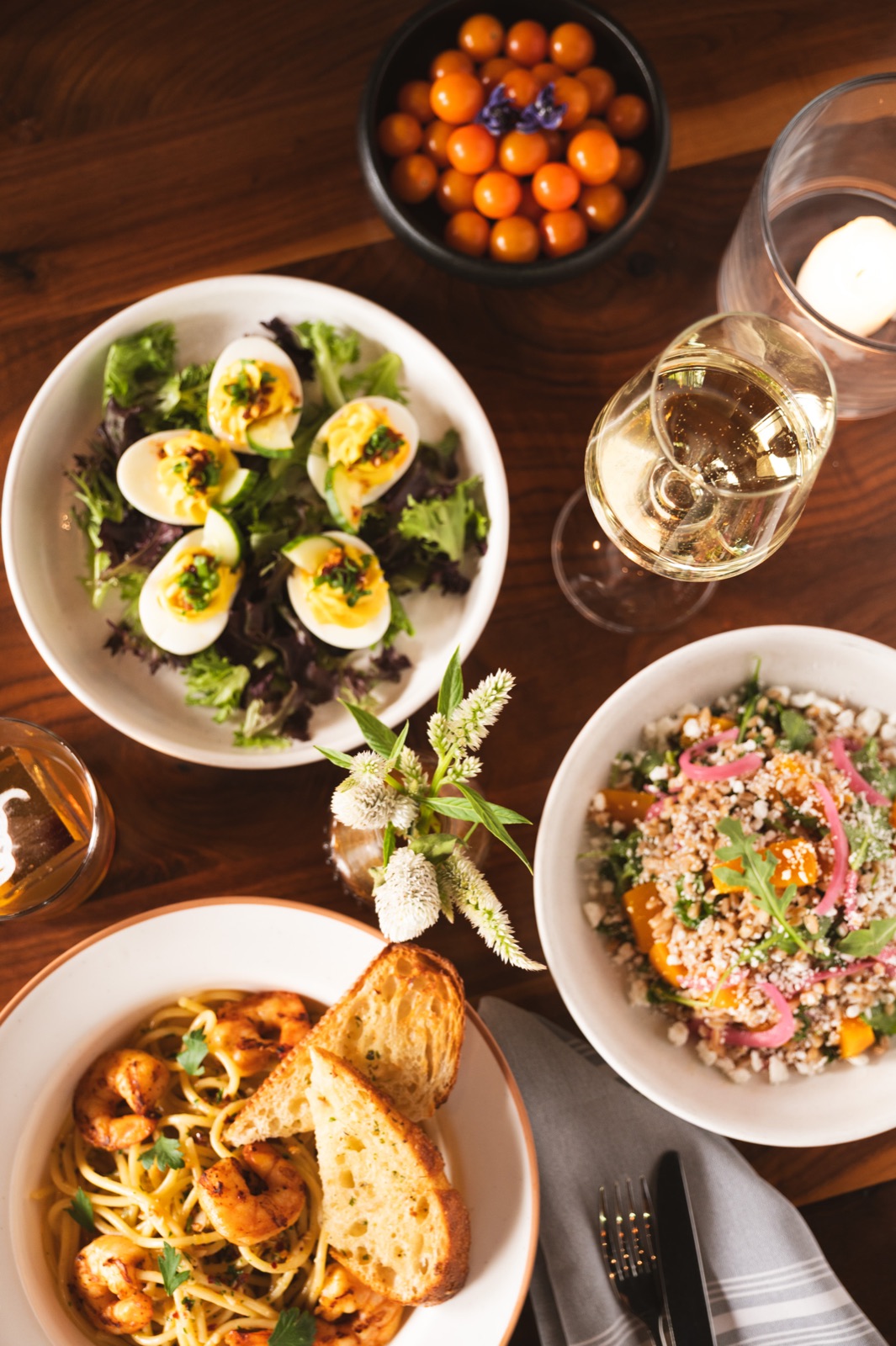
Practice translating a brief into pictures
Give yourself an imagined assignment, such as introducing a seasonal lunch menu. Decide who the photographs are for and where they would appear. Plan which image needs room for a headline and which details could work in a vertical crop.
If you share the project, describe it honestly as personal or practice work. A thoughtful self-directed series can show your visual decisions without implying that a restaurant commissioned it.
In my private workshop with the team at Segal Communications, participants practiced with guidance on a client they work with regularly. That connection to their everyday work gave the learning a practical context.
For a content creation company, this can also become a team exercise: work from the same brief, compare the results, and discuss which choices support the intended message.

Give yourself room to learn with others
Learning a new specialty can feel more approachable when you can ask questions, try an adjustment, and discuss what changed. That sense of exploration is central to Savor the Light.
Explore Savor the Light food photography workshops to learn more about the experience.
You can read about a past gathering in my Savor the Light workshop in San Francisco. If you are curious about a future session, get in touch. And if you lead a content team expanding into food or hospitality, tell me about your team and the skills you would like to develop.
For a closer look at the learning experience, explore Inside Savor the Light: a workshop for creatives and content teams.


Share to
BOOK NOW